[{"CategoryId":271,"CategoryName":"By Series","ParentId":0,"Imageurl":""},{"CategoryId":272,"CategoryName":"By Size","ParentId":0,"Imageurl":""},{"CategoryId":273,"CategoryName":"By Number of Pins","ParentId":0,"Imageurl":""},{"CategoryId":274,"CategoryName":"By Application","ParentId":0,"Imageurl":""},{"CategoryId":275,"CategoryName":"By Wiring","ParentId":0,"Imageurl":""},{"CategoryId":276,"CategoryName":"Customization","ParentId":0,"Imageurl":""},{"CategoryId":277,"CategoryName":"By Material","ParentId":0,"Imageurl":""},{"CategoryId":278,"CategoryName":"LP Series","ParentId":271,"Imageurl":"2025/07/20250724101928371.jpg?TFDns7vliJcuYmlwLjI1NTUuanBn"},{"CategoryId":1319,"CategoryName":"SF Series","ParentId":271,"Imageurl":"2025/09/20250913181601452.jpg?U0Y2LTgtMTDlhajlrrbnpo8uanBn"},{"CategoryId":1245,"CategoryName":"SP Series","ParentId":271,"Imageurl":"2025/09/20250913181428839.jpg?U1AuanBn"},{"CategoryId":279,"CategoryName":"Self Locking Series","ParentId":271,"Imageurl":"2024/09/20240905134920982.png?U2VsZiBMb2NraW5nIFNlcmllcw=="},{"CategoryId":280,"CategoryName":"Waterproof Cable Connector","ParentId":271,"Imageurl":"2024/09/20240905142754587.png?V2F0ZXJwcm9vZiBDYWJsZSBDb25uZWN0b3I="},{"CategoryId":281,"CategoryName":"Junction Box","ParentId":271,"Imageurl":"2024/09/20240905155939966.png?5o6l57q/55uS57O75YiXIDYxM3g2MTMucG5n"},{"CategoryId":1222,"CategoryName":"Cable Gland","ParentId":271,"Imageurl":"2025/03/20250320135315907.jpg?Y2FibGUtZ2xhbmQuanBn"},{"CategoryId":282,"CategoryName":"Energy Storage Connector","ParentId":271,"Imageurl":"2024/09/20240905143234262.png?RW5lcmd5IFN0b3JhZ2UgQ29ubmVjdG9y"},{"CategoryId":1161,"CategoryName":"PV Connector","ParentId":271,"Imageurl":"2024/09/20240905143119031.png?UFYgQ29ubmVjdG9y"},{"CategoryId":1541,"CategoryName":"M32","ParentId":272,"Imageurl":""},{"CategoryId":1351,"CategoryName":"M29","ParentId":272,"Imageurl":""},{"CategoryId":1170,"CategoryName":"M28","ParentId":272,"Imageurl":"2024/12/20241204113448729.png?TTI4IGVsZWN0cmljYWwgY29ubmVjdG9y"},{"CategoryId":1169,"CategoryName":"M25","ParentId":272,"Imageurl":"2024/12/20241204113352959.png?TTI1IGNpcmN1bGFyIHBsYXN0aWMgd2lyZSBjb25uZWN0b3I="},{"CategoryId":319,"CategoryName":"M24","ParentId":272,"Imageurl":"2024/12/20241204113237802.png?TTI0IEluZHVzdHJpYWwgd2F0ZXJwcm9vZiBjb25uZWN0b3I="},{"CategoryId":1168,"CategoryName":"M23","ParentId":272,"Imageurl":"2024/12/20241204112141563.png?TTIzIHdhdGVycHJvb2YgcGx1ZyBjb25uZWN0b3Jz"},{"CategoryId":1350,"CategoryName":"M21","ParentId":272,"Imageurl":""},{"CategoryId":318,"CategoryName":"M20","ParentId":272,"Imageurl":"2024/12/20241204112034702.png?TTIwIGNpcmN1bGFyIGNvbm5lY3Rvcg=="},{"CategoryId":1167,"CategoryName":"M19","ParentId":272,"Imageurl":"2024/12/20241204111937164.png?TTE5IHdhdGVycHJvb2Ygd2lyZSBjb25uZWN0b3Jz"},{"CategoryId":1349,"CategoryName":"M17","ParentId":272,"Imageurl":""},{"CategoryId":293,"CategoryName":"M16","ParentId":272,"Imageurl":"2024/12/20241204111827969.png?TTE2IGVsZWN0cmljYWwgY29ubmVjdG9y"},{"CategoryId":1166,"CategoryName":"M15","ParentId":272,"Imageurl":"2024/12/20241204111717740.png?TTE1IG1hbGUgYW5kIGZlbWFsZSBjb25uZWN0b3Jz"},{"CategoryId":1348,"CategoryName":"M13","ParentId":272,"Imageurl":""},{"CategoryId":292,"CategoryName":"M12","ParentId":272,"Imageurl":"2024/12/20241204111548642.png?TTEyIFdhdGVycHJvb2YgTTEyIENvbm5lY3Rvcg=="},{"CategoryId":1347,"CategoryName":"M10","ParentId":272,"Imageurl":""},{"CategoryId":1346,"CategoryName":"M8","ParentId":272,"Imageurl":""},{"CategoryId":1345,"CategoryName":"M6","ParentId":272,"Imageurl":""},{"CategoryId":335,"CategoryName":"TYPE-C","ParentId":273,"Imageurl":"2024/08/20240803175816209.jpg?TFAxNi1UWVBFLUPph5HlsZ7ms5XlhbAuanBn"},{"CategoryId":334,"CategoryName":"Fiber","ParentId":273,"Imageurl":"2024/07/20240730100446602.png?TFAyNC1GSUJFUig2KSAyMDB4MjAwIC0g5Ymv5pysLnBuZw=="},{"CategoryId":333,"CategoryName":"HDMI","ParentId":273,"Imageurl":"2024/07/20240730100616849.png?TFAyNC1IRE1JKDYpIDIwMHgyMDAgLSDlia/mnKwucG5n"},{"CategoryId":332,"CategoryName":"USB","ParentId":273,"Imageurl":"2024/07/20240730100646405.png?TFAyNC1VU0IoNikgMjAweDIwMCAtIOWJr+acrC5wbmc="},{"CategoryId":331,"CategoryName":"RJ45","ParentId":273,"Imageurl":"2024/07/20240730100713409.png?TFAyNC1SSjQ1KDYpIDIwMHgyMDAgLSDlr7nmjqUucG5n"},{"CategoryId":1335,"CategoryName":"26 Pins","ParentId":273,"Imageurl":"2025/09/20250908170725350.jpg?U1AyOS0yNlDkuKTlrZTluqfmraPoo4UgODAweDgwMC5qcGc="},{"CategoryId":330,"CategoryName":"24 Pins","ParentId":273,"Imageurl":"2024/07/20240730101220115.jpg?TFAyNC0yNFDpnaLmnb/ph5HlsZ7lj43oo4XmrL4uanBn"},{"CategoryId":1334,"CategoryName":"20 Pins","ParentId":273,"Imageurl":"2025/09/20250908170702461.jpg?U0YyOC0yMFDpnaLmnb8gODAweDgwMC5qcGc="},{"CategoryId":329,"CategoryName":"19 Pins","ParentId":273,"Imageurl":"2024/07/20240730101243254.jpg?TFAyNC0xOVDlr7nmj5Lph5HlsZ7lj43oo4XmrL4uanBn"},{"CategoryId":1333,"CategoryName":"18 Pins","ParentId":273,"Imageurl":"2025/09/20250908170641433.jpg?U0YyOC0xOFDlr7nmjqUgODAweDgwMC5qcGc="},{"CategoryId":1344,"CategoryName":"17 Pins","ParentId":273,"Imageurl":""},{"CategoryId":1332,"CategoryName":"16 Pins","ParentId":273,"Imageurl":"2025/09/20250908170620266.jpg?U0YyOC0xNlDpnaLmnb/luqflj43oo4UgODAweDgwMC5qcGc="},{"CategoryId":1215,"CategoryName":"14 Pins","ParentId":273,"Imageurl":"2024/08/20240808120100973.jpg?TFAyMC0xNFDms5XlhbDph5HlsZ7mraPoo4UuanBn"},{"CategoryId":328,"CategoryName":"12 Pins","ParentId":273,"Imageurl":"2024/07/20240730101400996.png?TFAyNC0xMlDms5XlhbDloZHmlpnlj43oo4XmrL4ucG5n"},{"CategoryId":327,"CategoryName":"10 Pins","ParentId":273,"Imageurl":"2024/07/20240730101422023.jpg?TFAyNC0xMFDlr7nmj5Lph5HlsZ7lj43oo4XmrL4uanBn"},{"CategoryId":326,"CategoryName":"9 Pins","ParentId":273,"Imageurl":"2024/07/20240730101545901.jpg?TFAyMC05UC3lr7nmj5ItMy5qcGc="},{"CategoryId":325,"CategoryName":"8 Pins","ParentId":273,"Imageurl":"2024/07/20240730101729864.jpg?TFAxNi04UOmdouadv0zph5HlsZ7mraPoo4UuanBn"},{"CategoryId":324,"CategoryName":"7 Pins","ParentId":273,"Imageurl":"2024/07/20240730101805407.jpg?TFAxNi03UOazleWFsFDph5HlsZ7mraPoo4UuanBn"},{"CategoryId":323,"CategoryName":"6 Pins","ParentId":273,"Imageurl":"2024/07/20240730101848277.png?TFAxMi02UCDlj43oo4UgMi5wbmc="},{"CategoryId":322,"CategoryName":"5 Pins","ParentId":273,"Imageurl":"2024/07/20240730102001465.jpg?TFAyNC01UOWFrOaPklPph5HlsZ7lj43oo4XplIHnur/mrL4uanBn"},{"CategoryId":321,"CategoryName":"4 Pins","ParentId":273,"Imageurl":"2024/07/20240730102053511.png?TFAyMC00UOazleWFsOWhkeaWmeato+ijhS5wbmc="},{"CategoryId":320,"CategoryName":"3 Pins","ParentId":273,"Imageurl":"2024/07/20240730102122414.jpg?TFAyOC0zUOWvueaPkuWhkeaWmeato+ijhS5qcGc="},{"CategoryId":295,"CategoryName":"2 Pins","ParentId":273,"Imageurl":"2024/07/20240730102152158.jpg?TFAyOC0yUOazleWFsOWhkeaWmeato+ijhS5qcGc="},{"CategoryId":294,"CategoryName":"1 Pin","ParentId":273,"Imageurl":"2024/12/20241202141836844.png?ZW5lcmd5IHN0b3JhZ2UgY29ubmVjdG9y"},{"CategoryId":296,"CategoryName":"Power Connector","ParentId":274,"Imageurl":"2024/08/20240803175721975.jpg?TFAxNi00UCg5KS5qcGc="},{"CategoryId":315,"CategoryName":"Signal Connector","ParentId":274,"Imageurl":"2024/07/20240730133750759.png?TFAyNC1SSjQ1KDYpIDIwMHgyMDAgLSDlia/mnKwucG5n"},{"CategoryId":297,"CategoryName":"Data Connector","ParentId":274,"Imageurl":"2024/07/20240730093457270.png?TFAyNC1VU0IoNikgMjAweDIwMCAtIOWJr+acrC5wbmc="},{"CategoryId":338,"CategoryName":"Crimping Type","ParentId":275,"Imageurl":"2024/12/20241202143025954.png?TFAxMi0yUOWvueaPkumHkeWxnuato+ijhSA3NTB4NzUwLnBuZw=="},{"CategoryId":336,"CategoryName":"Solder Type","ParentId":275,"Imageurl":"2024/12/20241202142826795.png?TFAyNC0y6Iqv54SK5o6l5aGR5paZ5qy+5rOV5YWw5Y+N6KOFc2t1LnBuZw=="},{"CategoryId":337,"CategoryName":"Screw Type","ParentId":275,"Imageurl":"2024/12/20241202142506193.png?TFAxMi0yUOazleWFsFDph5HlsZ7plIHnur/lj43oo4UucG5n"},{"CategoryId":298,"CategoryName":"Screwless Type","ParentId":275,"Imageurl":"2024/05/20240529162027688.jpg?5b+r5o6l57O75YiXLmpwZw=="},{"CategoryId":301,"CategoryName":"Mix Pins","ParentId":276,"Imageurl":"2024/07/20240730102324120.jpg?TFAyOC0zUOazleWFsOWhkeaWmeato+ijhS0xLmpwZw=="},{"CategoryId":1330,"CategoryName":"Color","ParentId":276,"Imageurl":""},{"CategoryId":317,"CategoryName":"Metal + Plastic","ParentId":277,"Imageurl":"2024/08/20240803180032739.jpg?TFAxMi00UOazleWFsOmHkeWxnuWPjeijhS5qcGc="},{"CategoryId":316,"CategoryName":"All Metal","ParentId":277,"Imageurl":"2024/11/20241121135153910.png?TFAxMi0yUOazleWFsOasvumUgee6vy5wbmc="},{"CategoryId":300,"CategoryName":"All Plastic","ParentId":277,"Imageurl":"2024/08/20240803180224853.png?TFAxMi00UCDlj43oo4UgNy5wbmc="},{"CategoryId":287,"CategoryName":"LP12","ParentId":278,"Imageurl":"2024/12/20241203141919861.png?TFAxMiBlbGVjdHJpY2FsIHdhdGVycHJvb2YgY29ubmVjdG9ycw=="},{"CategoryId":283,"CategoryName":"LP16","ParentId":278,"Imageurl":"2024/12/20241203141926793.png?TFAxNiB3YXRlcnByb29mIHBsdWcgY29ubmVjdG9ycw=="},{"CategoryId":286,"CategoryName":"LP20","ParentId":278,"Imageurl":"2024/12/20241203140522654.png?TFAyMCBJbmR1c3RyaWFsIHdhdGVycHJvb2YgY29ubmVjdG9y"},{"CategoryId":285,"CategoryName":"LP24","ParentId":278,"Imageurl":"2024/12/20241203140638274.jpg?TFAyNCB3YXRlcnByb29mIHBsdWcgY29ubmVjdG9ycw=="},{"CategoryId":284,"CategoryName":"LP28","ParentId":278,"Imageurl":"2024/12/20241203140831377.png?TFAyOCBXYXRlcnByb29mIENhYmxlIENvbm5lY3Rvcg=="},{"CategoryId":1540,"CategoryName":"LP32","ParentId":278,"Imageurl":"2026/04/20260416174331064.jpg?TFAzMi3lhajlrrbnpo8t5Li75Zu+LjgyNjdf5riy5p+T5bGCIDQuanBn"},{"CategoryId":303,"CategoryName":"M15MP/MF","ParentId":279,"Imageurl":"2024/07/20240730095659595.jpg?TTE1TUYtM1AuanBn"},{"CategoryId":304,"CategoryName":"M19MP/MF","ParentId":279,"Imageurl":"2024/07/20240730095626837.jpg?6Z2i5p2/55m95bqVIC0g5Ymv5pysLmpwZw=="},{"CategoryId":305,"CategoryName":"M23MP/MF","ParentId":279,"Imageurl":"2024/07/20240730095548936.jpg?RVctTTIzTVA="},{"CategoryId":307,"CategoryName":"M28MP/MF","ParentId":279,"Imageurl":"2024/07/20240730095408770.jpg?RVctTTI4TVA="},{"CategoryId":306,"CategoryName":"P25MP/MF","ParentId":279,"Imageurl":"2024/07/20240729185729105.png?UDI1LS3oiq/mlbAt5aSW57q/55u05b6E5Zu+IDIwMHgyMDAucG5n"},{"CategoryId":1209,"CategoryName":"P23MP/MF","ParentId":279,"Imageurl":"2024/07/20240730100244127.png?UDIzLnBuZw=="},{"CategoryId":302,"CategoryName":"Screw Connector Series","ParentId":280,"Imageurl":"2024/12/20241203142740551.png?U2NyZXcgQ29ubmVjdG9yIFNlcmllcw=="},{"CategoryId":289,"CategoryName":"Screwless Connector Series","ParentId":280,"Imageurl":"2024/09/20240905144436844.png?U2NyZXdsZXNzIENvbm5lY3RvciBTZXJpZXM="},{"CategoryId":290,"CategoryName":"2068 Serie","ParentId":281,"Imageurl":"2024/07/20240730094848584.png?RVctTTIwNjgtNVQucG5n"},{"CategoryId":1536,"CategoryName":"2068N Serie","ParentId":281,"Imageurl":"2026/01/20260116110540406.png?TTIwNjhOLTJUICAoMikucG5n"},{"CategoryId":1538,"CategoryName":"2068R Serie","ParentId":281,"Imageurl":"2026/02/20260206151256783.png?RVctTTIwNjhSLTFUICgxKS5wbmc="},{"CategoryId":308,"CategoryName":"2068S Serie","ParentId":281,"Imageurl":"2024/07/20240729190104148.jpg?55m95bqVMy5qcGc="},{"CategoryId":309,"CategoryName":"2068L Serie","ParentId":281,"Imageurl":"2024/07/20240729190043564.jpg?55m95bqVMi5qcGc="},{"CategoryId":310,"CategoryName":"2068XL Serie","ParentId":281,"Imageurl":"2024/07/20240730094724530.jpg?MTAuanBn"},{"CategoryId":1159,"CategoryName":"350A","ParentId":282,"Imageurl":"2024/07/20240729190329212.jpg?RTMwMC0zNTDlj6/ml4vovazlhYnlrZTpk5zmjpLmqZnoibLlpZfoo4VTS1UuanBn"},{"CategoryId":1158,"CategoryName":"300A","ParentId":282,"Imageurl":"2024/07/20240729190349998.jpg?RTMwMOS4jeWPr+aXi+i9rOWFieWtlOmTnOaOkum7keiJsuWll+ijhVNLVS5qcGc="},{"CategoryId":341,"CategoryName":"250A","ParentId":282,"Imageurl":"2024/07/20240729190408955.jpg?RTEwMC0yNTDlj6/ml4vovazonrrmn7HmqZnoibLlpZfoo4VTS1UuanBn"},{"CategoryId":340,"CategoryName":"200A","ParentId":282,"Imageurl":"2024/07/20240729190435882.jpg?RTI1MOS4jeWPr+aXi+i9rOieuuafsem7keiJsuWll+ijhVNLVS5qcGc="},{"CategoryId":339,"CategoryName":"150A","ParentId":282,"Imageurl":"2024/07/20240729190456384.jpg?RTEwMC0yNTDlj6/ml4vovazlhYnlrZTpk5zmjpLmqZnoibLlpZfoo4VTS1UuanBn"},{"CategoryId":311,"CategoryName":"120A","ParentId":282,"Imageurl":"2024/07/20240729190538607.jpg?RTI1MOS4jeWPr+aXi+i9rOWFieWtlOmTnOaOkum7keiJsuWll+ijhVNLVS5qcGc="},{"CategoryId":312,"CategoryName":"100A","ParentId":282,"Imageurl":"2024/07/20240729190551775.jpg?RTEwMC0yNTDkuI3lj6/ml4vovazonrrmn7HmqZnoibLlpZfoo4VTS1UuanBn"},{"CategoryId":313,"CategoryName":"70A","ParentId":282,"Imageurl":"2024/07/20240729190619040.jpg?RTUw5Y+v5peL6L2s5YWJ5a2U6ZOc5o6S6buR6Imy5aWX6KOFU0tVXy5qcGc="},{"CategoryId":314,"CategoryName":"50A","ParentId":282,"Imageurl":"2024/07/20240729190633170.jpg?RTUwLTcw5LiN5Y+v5peL6L2s5YWJ5a2U6ZOc5o6S5qmZ6Imy5aWX6KOFU0tVLmpwZw=="},{"CategoryId":1533,"CategoryName":"LP20","ParentId":298,"Imageurl":""},{"CategoryId":1526,"CategoryName":"M25B","ParentId":298,"Imageurl":""},{"CategoryId":299,"CategoryName":"P25","ParentId":298,"Imageurl":"2024/05/20240529162134233.jpg?UDIzLjIuanBn"},{"CategoryId":1531,"CategoryName":"P23","ParentId":298,"Imageurl":""},{"CategoryId":1107,"CategoryName":"P20","ParentId":298,"Imageurl":"2024/09/20240909134224415.png?UDIwLS3oiq/mlbAt5aSW57q/55u05b6E5Zu+LSA2MTN4NjEzLnBuZw=="},{"CategoryId":1530,"CategoryName":"P25X","ParentId":298,"Imageurl":""},{"CategoryId":1529,"CategoryName":"P25T","ParentId":298,"Imageurl":""},{"CategoryId":1528,"CategoryName":"P20X","ParentId":298,"Imageurl":""},{"CategoryId":1527,"CategoryName":"P20T","ParentId":298,"Imageurl":""},{"CategoryId":1165,"CategoryName":"65A","ParentId":1161,"Imageurl":"2024/07/20240729190717746.jpg?MTBtbcKy6Z2i5p2/5bel5YW36Kej6ZSB5YWs5o+S5aS0LmpwZw=="},{"CategoryId":1164,"CategoryName":"45A","ParentId":1161,"Imageurl":"2024/07/20240729190731167.jpg?Nm1twrLnur/nq6/lt6Xop6PplIHlhazmj5LlpLQuanBn"},{"CategoryId":1163,"CategoryName":"35A","ParentId":1161,"Imageurl":"2024/07/20240729190743086.jpg?NG1twrLnur/nq6/lt6Xlhbfop6PplIHlhazmj5LlpLQuanBn"},{"CategoryId":1201,"CategoryName":"25A","ParentId":1161,"Imageurl":"2024/07/20240729190756464.jpg?Mi41bW3Csue6v+err+W3peWFt+ino+mUgeWFrOaPkuWktC5qcGc="},{"CategoryId":1223,"CategoryName":"PG Metal Series","ParentId":1222,"Imageurl":""},{"CategoryId":1243,"CategoryName":"PG Plastic Series","ParentId":1222,"Imageurl":""},{"CategoryId":1224,"CategoryName":"M Metal Series","ParentId":1222,"Imageurl":""},{"CategoryId":1244,"CategoryName":"M Plastic Series","ParentId":1222,"Imageurl":""},{"CategoryId":1247,"CategoryName":"SP13","ParentId":1245,"Imageurl":""},{"CategoryId":1246,"CategoryName":"SP17","ParentId":1245,"Imageurl":""},{"CategoryId":1327,"CategoryName":"SP21","ParentId":1245,"Imageurl":""},{"CategoryId":1326,"CategoryName":"SP29","ParentId":1245,"Imageurl":""},{"CategoryId":1320,"CategoryName":"SF6","ParentId":1319,"Imageurl":""},{"CategoryId":1321,"CategoryName":"SF8","ParentId":1319,"Imageurl":""},{"CategoryId":1328,"CategoryName":"SF10","ParentId":1319,"Imageurl":""},{"CategoryId":1322,"CategoryName":"SF12","ParentId":1319,"Imageurl":""},{"CategoryId":1323,"CategoryName":"SF16","ParentId":1319,"Imageurl":""},{"CategoryId":1324,"CategoryName":"SF20","ParentId":1319,"Imageurl":""},{"CategoryId":1325,"CategoryName":"SF28","ParentId":1319,"Imageurl":""}]
Outdoor Cable Connector for Reliable Outdoor Lighting Systems-医疗行业新能源行业通讯行业工控设备机器人行业照明行业产品知识媒体报道公司新闻常见问题答疑产品基础知识连接器选型产品证书宣传资料安装视频安装流程书三维图产品规格书防水接线端子储能连接器防水接线盒数据连接器电源连接器信号连接器Waterproof Cable ConnectorEnergy Storage ConnectorJunction BoxData ConnectorSignal ConnectorPower ConnectorMedical IndustryNew Energy IndustryCommunications IndustryIndustrial Control EquipmentRobotics IndustryLighting IndustryFAQProduct BasicsConnector SelectionProduct CertificatePropagandaInstallation VideoInstallation Procedure BookThree Dimensional MapProduct SpecificationsProduct KnowledgeMediaCompany NewsPV ConnectorCable GlandLighting Connector
Outdoor lighting systems may look simple from the outside, but the electrical connections behind them operate in a much more demanding environment. Street lighting, landscape lighting, garden lights, pathway lighting and other outdoor LED systems are regularly exposed to rain, humidity, dust, temperature changes and mechanical stress.
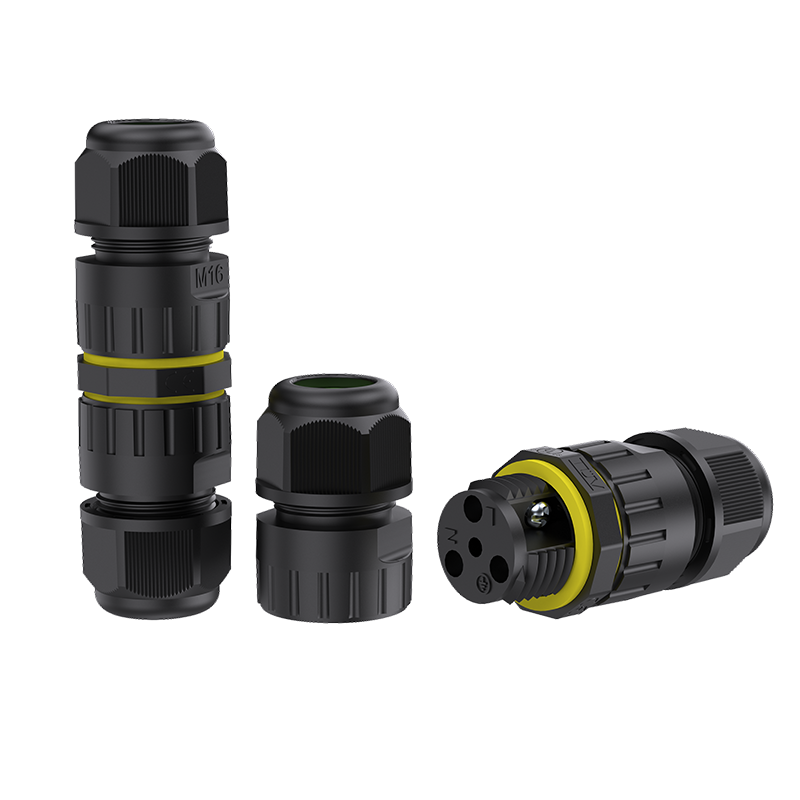
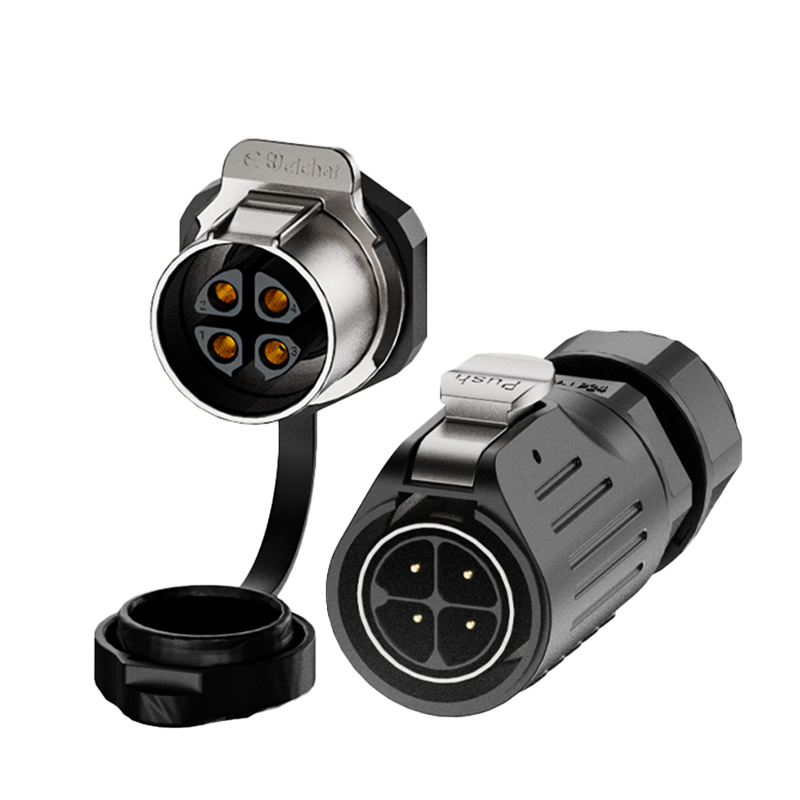
For lighting manufacturers and system integrators, the cable connection is therefore an important part of the overall system design. A reliable Outdoor Cable Connector needs to provide more than a secure electrical connection. It also needs to maintain environmental protection while allowing practical installation, maintenance and cable routing.
This application case explains how waterproof cable connectors can be used in outdoor lighting systems and what engineers and purchasing teams should consider when selecting a connector for long-term outdoor operation.
Why Outdoor Lighting Needs a Reliable Cable Connection
Outdoor lighting equipment is often installed in locations where electrical connections cannot be fully protected inside an enclosure. A lighting cable may run along a pole, beneath a landscape surface, inside a garden structure or directly between two outdoor lighting units.
Unlike an indoor electrical connection, an outdoor connection can be exposed to changing weather conditions throughout the year.
-
Rain and water splash
-
High humidity and condensation
-
Dust and dirt
-
Temperature fluctuations
-
UV exposure
-
Mechanical vibration
-
Cable pulling and bending
-
Repeated maintenance or replacement
Any weakness in the cable connection can become a potential maintenance problem. Water ingress, loose connections or damaged cable interfaces may affect lighting performance and increase the time required for troubleshooting.
This is why the connector should be considered as part of the outdoor lighting system rather than simply as a small accessory.
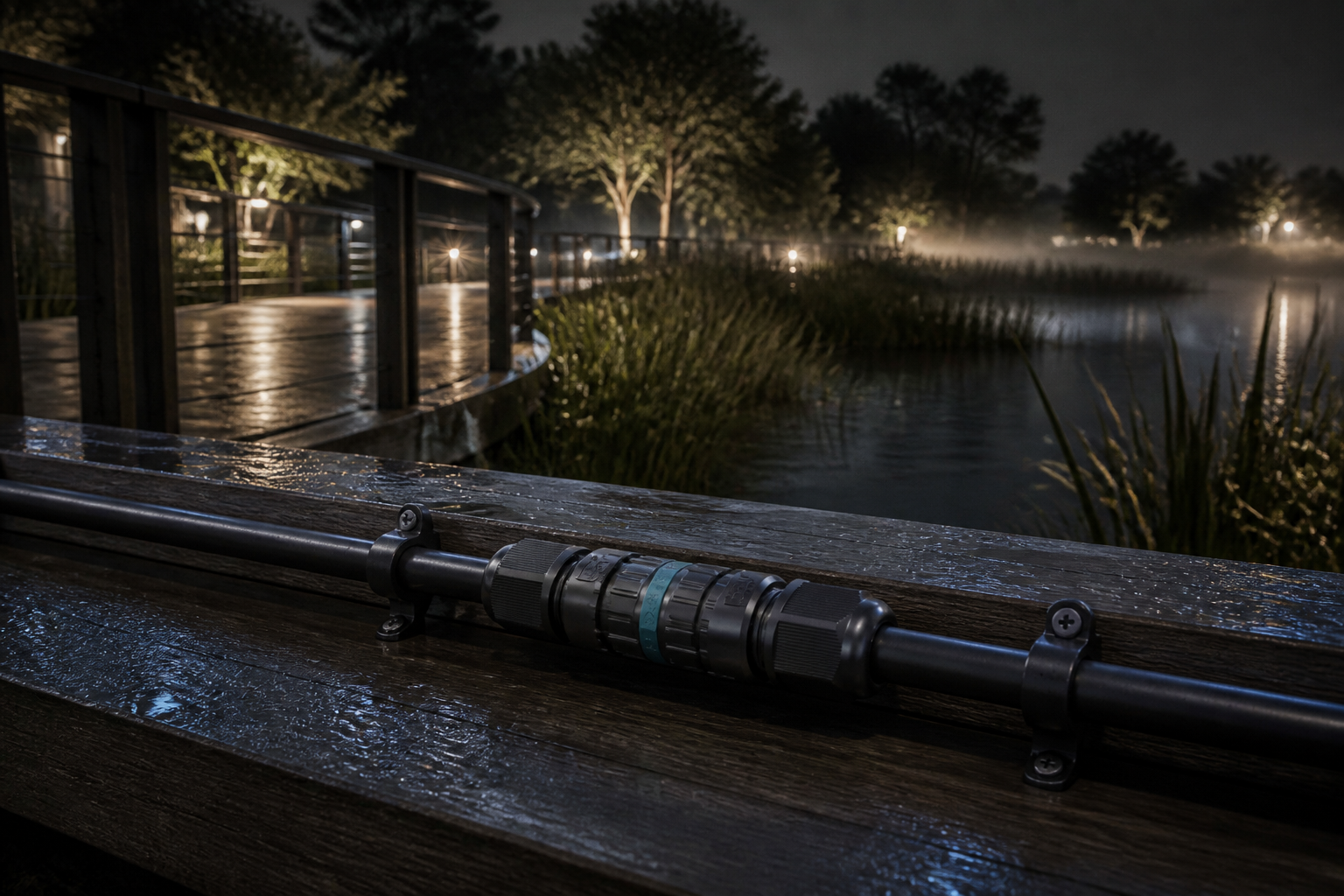
Outdoor Cable Connector Selection for LED Lighting
LED lighting manufacturers typically need to balance several requirements when selecting a connector. The connector must match the electrical characteristics of the lighting system while also fitting the physical installation environment.
Waterproof Protection
For outdoor applications, protection against water and dust is one of the first specifications engineers normally evaluate.
An IP68 waterproof connector can be considered for applications requiring a high level of protection against dust and water ingress under the applicable test conditions. This can be particularly relevant when a connector is installed in an exposed outdoor location.
However, an IP rating should not be treated as a complete environmental durability specification. IP68 describes ingress protection under defined testing conditions. It does not by itself define resistance to every chemical, UV exposure, temperature cycle, vibration condition or mechanical load.
For this reason, the actual installation environment should always be evaluated together with the connector specification.
Application Example: Outdoor LED Lighting Along a Roadway
Consider a typical outdoor LED lighting project along a road or pedestrian area.
Multiple LED lighting units are installed at intervals along the roadside. Each light requires a power connection, while the cables are routed along poles or through protected sections near the ground.
The connectors may remain exposed to rain and humidity for extended periods. During installation, the cables may also be pulled, bent or repositioned by installers.
In this type of application, an Outdoor Cable Connector needs to address three practical requirements:
-
Maintain a protected electrical connection
-
Provide a secure mechanical connection between cables
-
Allow installers to complete the connection efficiently
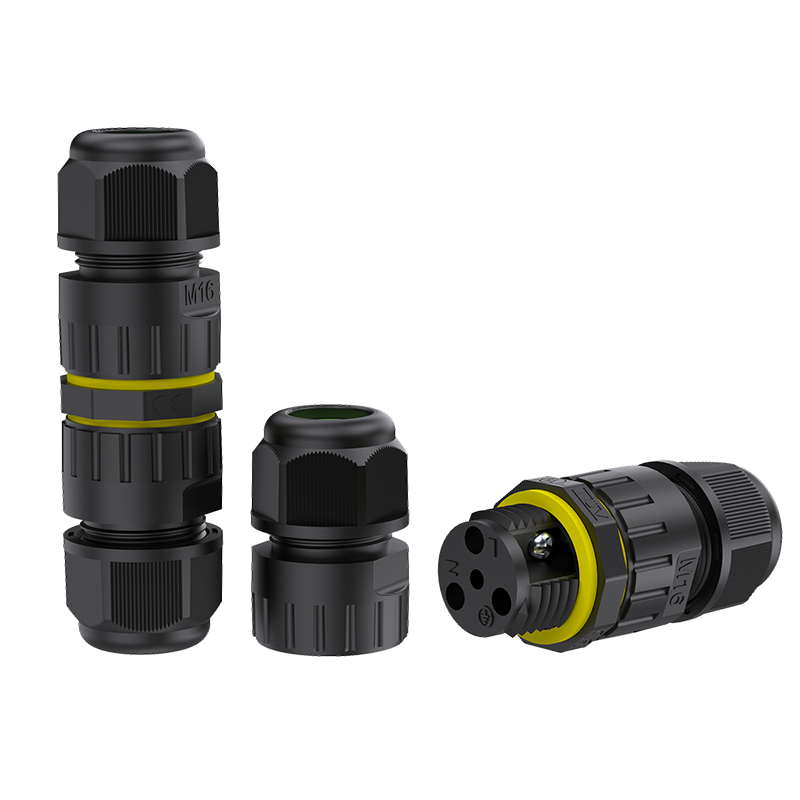
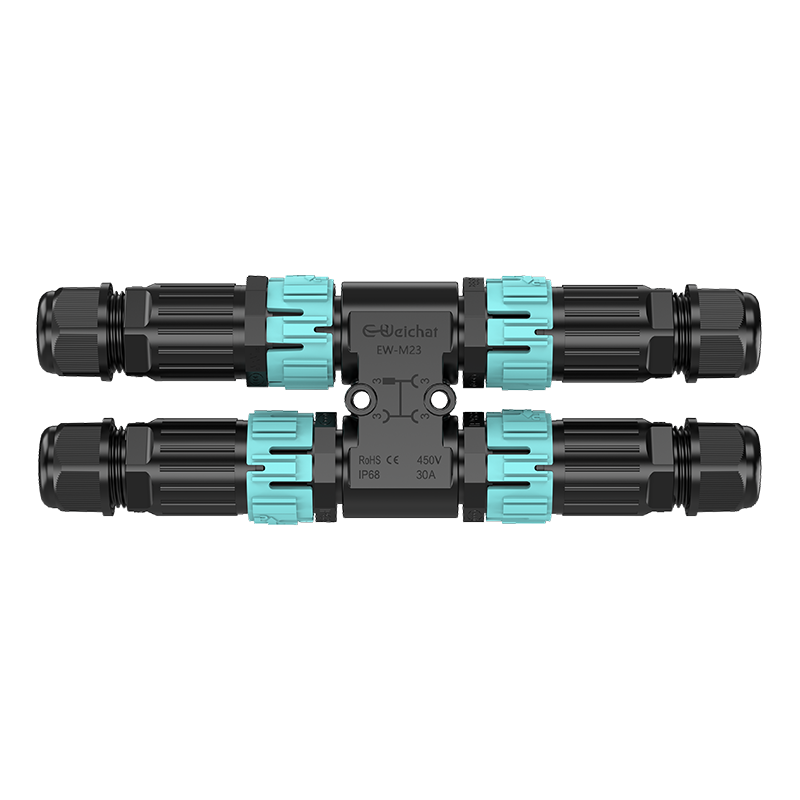
A waterproof cable connector with an appropriate sealing structure can help protect the connection point from environmental exposure. The connector's cable range must also match the actual outer diameter of the cable being used.
Cable Diameter Matters
The sealing performance of a waterproof cable connection depends partly on the relationship between the connector sealing components and the cable.
For example, if a connector is specified for a particular cable diameter range, the actual cable should remain within that range. A replacement cable with a significantly different outer diameter may change the sealing condition.
For lighting OEMs, this is particularly important when different cable suppliers are used during production or when a project moves from prototype to mass production.
Before finalizing the connector, engineers should confirm the cable outer diameter, conductor configuration, cable jacket material and required electrical ratings.
Outdoor Landscape Lighting and Garden Lighting
Landscape lighting presents another common application for waterproof cable connectors.
Garden lights, pathway lights and decorative LED lighting are often installed close to the ground. Cable connections may be located in areas where they are exposed to rainwater, irrigation systems, soil moisture and cleaning activities.
In these installations, connector location is just as important as connector specification.
A waterproof connector should be installed according to the manufacturer's instructions, and the cable should be routed in a way that minimizes unnecessary mechanical stress.
Where the connector is installed near the ground, designers should also consider drainage, cable support and accessibility for future maintenance.
Why Cable Routing Should Not Be Ignored
A waterproof connector is not designed to compensate for poor cable routing.
If a long cable hangs directly from the connector, the connector may experience continuous mechanical loading. If the cable is repeatedly bent at the same point, the cable jacket and connection area can also experience additional stress.
For outdoor lighting projects, suitable cable support and routing should therefore be considered together with connector selection.
Outdoor Lighting Connectors and Temperature Changes
Outdoor lighting equipment may experience significant temperature changes between daytime and nighttime operation.
Seasonal conditions can create an even wider temperature range.
Temperature affects the materials used in a connector, including housing materials, seals and cable jackets. Different materials can expand and contract at different rates as temperature changes.
For an outdoor lighting connector, engineers should therefore check the specified operating temperature range of the selected model and ensure that it matches the project requirements.
This is especially important for lighting systems installed in locations with strong seasonal temperature differences.
Mechanical Protection for Outdoor Cable Connections
Outdoor lighting connectors can also be exposed to mechanical stress during installation and maintenance.
Installers may pull cables through conduits, adjust the position of lighting fixtures or disconnect equipment during service work.
A suitable locking mechanism can help maintain the intended mating condition once the connector has been properly assembled.
Depending on the connector design, locking may be achieved through a threaded structure or another mechanical retention method.
For engineers selecting an Outdoor Cable Connector, the important question is not simply whether the connector can be connected and disconnected. The complete installation should be evaluated for accessibility, cable routing, available space and expected maintenance frequency.
Choosing an Outdoor Cable Connector for Different Lighting Systems
Not every outdoor lighting project requires exactly the same connector configuration.
Street and Road Lighting
Roadside lighting typically requires reliable power connections with strong environmental protection. The connector should be compatible with the lighting cable and installation structure while providing appropriate protection against outdoor exposure.
Landscape Lighting
Landscape lighting often involves multiple small lighting fixtures distributed across a large area. Compact cable connections and practical installation can therefore be important considerations.
Garden and Pathway Lighting
Garden and pathway lighting may be installed close to irrigation systems or areas exposed to water and soil moisture. Waterproof cable connections can help protect vulnerable connection points when correctly selected and installed.
Architectural and Decorative Lighting
Architectural LED lighting may require compact cable connections around building facades, outdoor structures or decorative installations. Space limitations can make connector dimensions and cable routing particularly important.
IP68 Outdoor Cable Connector: What Buyers Should Check
When sourcing an IP68 Outdoor Cable Connector, purchasing teams should avoid evaluating the product based only on the IP rating.
A practical supplier evaluation should include the following information:
-
IP protection rating
-
Operating voltage
-
Rated current
-
Number of contacts
-
Applicable cable diameter
-
Operating temperature
-
Connector dimensions
-
Locking method
-
Housing and sealing materials
-
Available test documentation
-
Required certifications
If the project requires TUV certification, buyers should also verify the relevant certification documentation for the exact connector model or product series being considered.
This is more reliable than evaluating a supplier based on a general statement that its products are certified.
How E-Weichat Supports Outdoor Lighting Applications
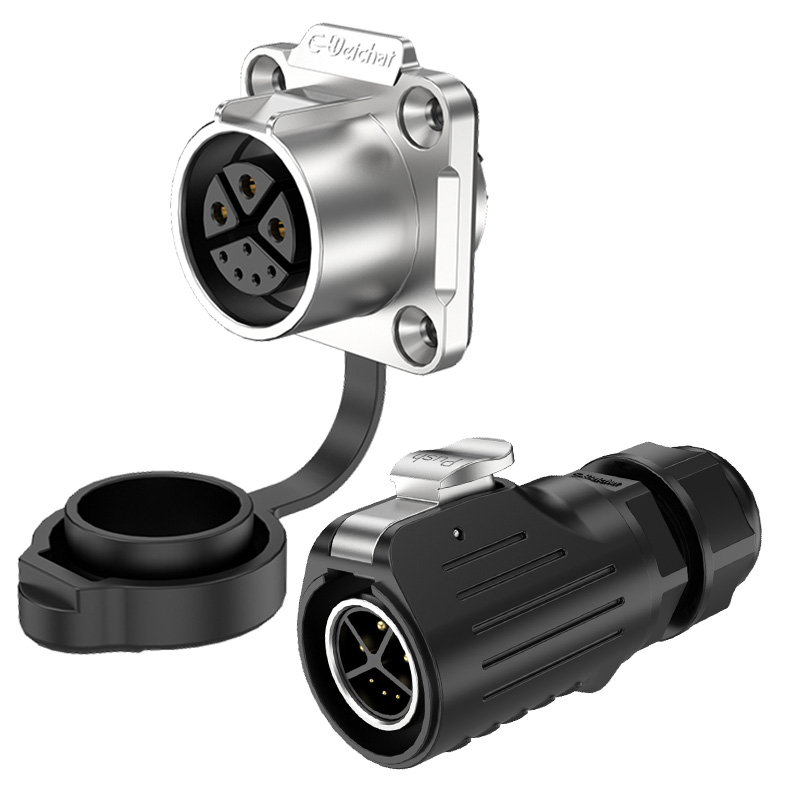
E-Weichat develops and manufactures waterproof connector solutions for applications where protected cable connections are required.
For outdoor lighting projects, selected E-Weichat connector models are available with high levels of environmental protection, including IP68-rated solutions for applicable applications.
The connector design can be evaluated according to the actual cable diameter, electrical requirements, installation method and environmental conditions of the lighting system.
For OEM lighting manufacturers and project integrators, this application-based approach can be useful when standard catalog configurations do not fully match the project requirements.
E-Weichat also supports OEM and ODM connector requirements, allowing customers to discuss specific cable, connector and installation requirements with the engineering team before production.
Outdoor Cable Connector Selection Checklist
Before approving a connector for an outdoor lighting project, engineers and purchasing teams can review the following points:
-
Is the connector suitable for the actual outdoor environment?
-
Is the required IP rating clearly defined?
-
Does the connector match the cable outer diameter?
-
Are the voltage and current ratings suitable?
-
Is the locking mechanism appropriate for the installation?
-
Will the connector experience vibration or cable movement?
-
Is the operating temperature range sufficient?
-
Can technicians access the connector during maintenance?
-
Are the required test reports and certifications available?
-
Has the exact connector model been evaluated rather than only the product family?
Why the Connection Point Matters in Outdoor Lighting
Outdoor lighting reliability is not determined by the LED module alone.
The power supply, cable, connector, enclosure and installation method all contribute to the performance of the complete system.
The connector is a relatively small component, but it sits directly at the cable interface. If that interface is exposed to rain, humidity, dust or mechanical stress, it needs to be designed for those conditions.
For this reason, selecting an Outdoor Cable Connector should begin with the real installation environment and then move toward the appropriate electrical, mechanical and environmental specifications.
For lighting manufacturers and system integrators, this approach can reduce compatibility issues during installation and make future maintenance more predictable.
Frequently Asked Questions
What is an Outdoor Cable Connector?
An Outdoor Cable Connector is a connector designed for cable-to-cable or equipment cable connections in outdoor environments. Depending on the specific design, it can provide protection against dust and water ingress while maintaining the required electrical connection.
Is an IP68 connector suitable for outdoor lighting?
An IP68 connector can be suitable for outdoor lighting applications where a high level of dust and water-ingress protection is required. The exact model, cable diameter, installation method and environmental conditions should be checked before approval.
What should I provide when sourcing an outdoor lighting connector?
Provide the lighting application, cable outer diameter, voltage, current, number of contacts, installation method, environmental conditions, operating temperature and certification requirements. These details allow the connector supplier to recommend a configuration based on the actual application.
-
Fast and Convenient
-
Customization
- Need a technical consultant to answer your questions?
-
-
Hot Promoted Products
Recommend current hot products to you